After-Hours Answering Service for Small Businesses: How to Handle Calls After Closing
Posted in :

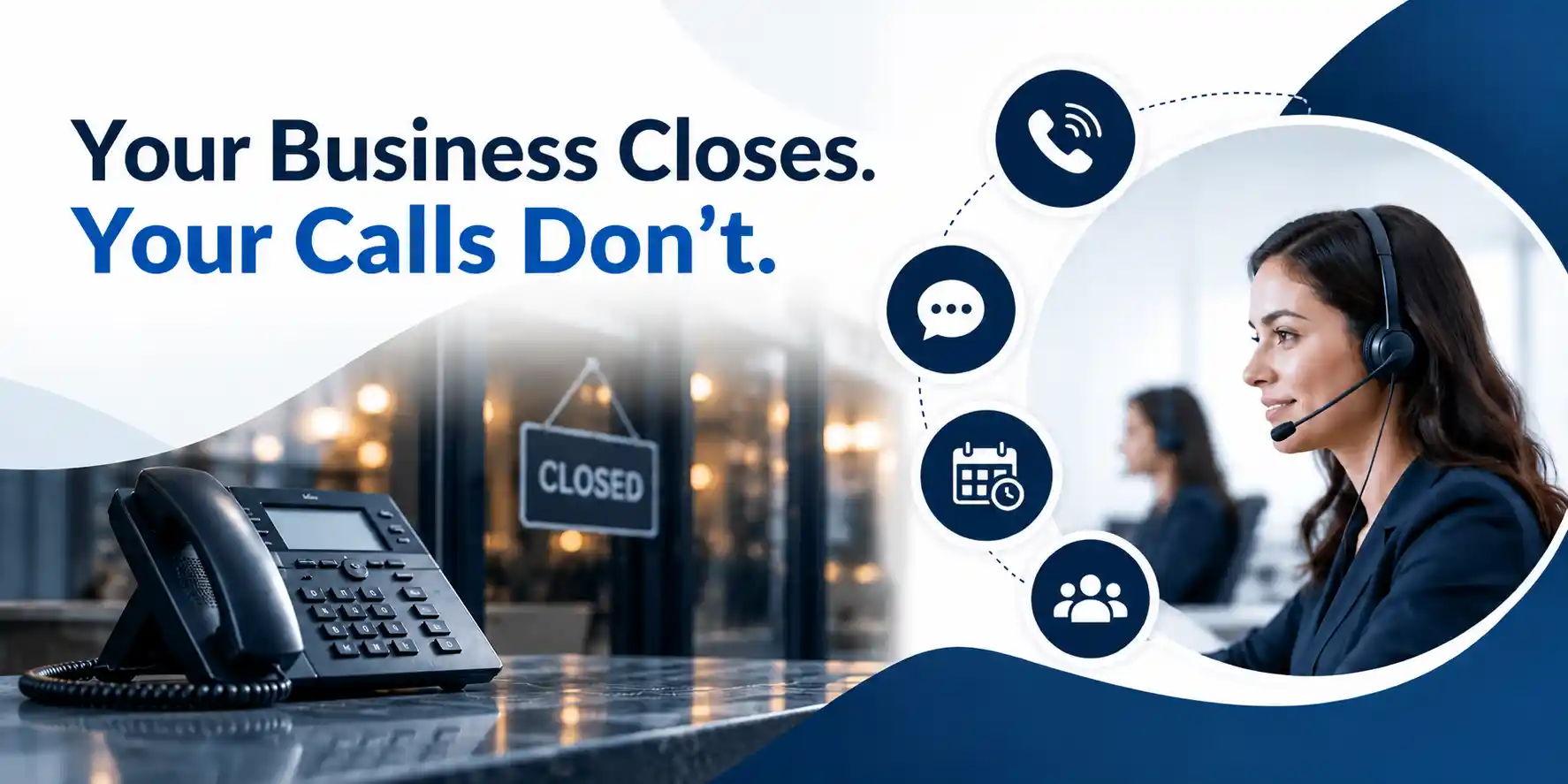
Your business may close at 5 p.m., but your customers’ needs don’t always follow the same schedule.
A homeowner might discover a plumbing leak after dinner. Someone comparing contractors may call on Sunday afternoon. An existing customer may need help just as your team is heading home.
If no one answers, the caller has to decide what to do next: leave a voicemail, try again tomorrow, or contact another business. You can’t prevent every missed call, but you can make it easier for customers to reach the right person.
An after-hours answering service gives your business a way to respond outside regular office hours without asking you or your employees to stay beside the phone all night. In this guide, we’ll explain how these services work, which businesses may benefit, and what to look for when choosing a provider.
What Is an After-Hours Answering Service?
An after-hours answering service handles incoming business calls when your office is closed or your team can’t answer. Instead of sending every caller to voicemail, you arrange for a live representative to answer using instructions you provide.
Depending on the plan and provider, representatives may take messages, collect contact details, record appointment requests, transfer calls, or notify an on-call team member.
Consider an HVAC company that gets a call at 8 p.m. because a customer’s heating system has stopped working. The office is closed, but the caller can still explain the issue and leave the details the team needs. If the situation meets the company’s definition of an emergency, the representative follows the agreed escalation process.
Your business sets those rules in advance. The service’s role is to answer professionally, capture useful information, and make sure the next step is clear
Why Small Businesses Need After-Hours Call Answering
Customers Call When It Suits Them
People often contact businesses after work, on weekends, or when they finally have time to deal with a problem. Some calls are simple questions; others may involve a repair or a time-sensitive request. A clear after-hours process helps customers understand what will happen even when your regular team is unavailable.
You can’t stop work every time the phone rings
Small business owners often handle sales, service delivery, scheduling, and paperwork themselves. If you’re meeting a customer, working at a job site, or driving between appointments, answering every call may not be practical. An answering service gives you another way to manage incoming calls while you focus on the task in front of you.
Some requests need attention sooner than others
A request for a quote can usually wait until the next business day. A serious service issue may need to reach someone on call. Clear instructions help representatives distinguish routine messages from calls that need to be escalated.
Voicemail isn’t right for every caller
Voicemail remains a useful, low-cost option, especially when most inquiries can wait. But not everyone will leave a message, and some callers need to explain their situation to a person. Live answering gives them an opportunity to share the details and helps your team receive more complete information.
Four Ways to Handle Calls When Your Office Is Closed
There’s no single best option for every business. Think about your call volume, the types of inquiries you receive, and how quickly someone needs to respond.
1. Standard voicemail
Voicemail lets callers leave their name, number, and a message. It can be enough if calls are infrequent and most inquiries are non-urgent. Your team will still need to check messages, identify priorities, and return calls.
Best for: Businesses with low call volumes and inquiries that can usually wait until the next working day.
2. Call forwarding
Call forwarding sends calls to another number, such as your mobile or an employee’s phone. It’s straightforward, but it still depends on someone being available. Calls can become disruptive when you’re driving, helping another customer, or taking time away from work.
Best for: Owners or teams who need to remain reachable for selected calls.
3. Automated phone systems
An automated system greets callers and offers menu options, such as sales, support, or leaving a message. This can help route predictable inquiries, particularly when a business has several teams. However, menus need to be kept up to date, and callers may struggle if their situation doesn’t fit the available choices.
Best for: Businesses that need structured call routing across departments or teams.
4. A live answering service
A live answering service uses real people to answer calls on your business’s behalf. Depending on the arrangement, they can take messages, collect lead details, handle appointment requests, transfer calls, or contact an on-call employee.
Live answering can also work alongside voicemail and call forwarding. Routine inquiries might be passed to your team for the next business day, while urgent requests follow a separate escalation process.
Best for: Businesses that want a personal response without employing someone in-house to answer every call.
How Does an After-Hours Answering Service Work?
A smooth setup starts with deciding what should happen when a customer calls. The provider can then use your instructions to handle calls consistently.
Step 1: Choose your coverage hours
Review when calls are most likely to go unanswered. You may need evening, weekend, or holiday coverage-or support only during your busiest periods. Full 24/7 coverage isn’t necessary for every business.
Step 2: Set your greeting and instructions
Share your preferred greeting, business hours, services, common questions, and any information representatives should provide. Clear instructions help callers receive a consistent experience.
Step 3: Decide what details to collect
Choose the information your team needs to follow up. A plumbing company might ask for a name, phone number, service address, and brief description of the problem. A professional office may need the caller’s name, reason for calling, and intended contact.
Step 4: Define urgent calls
If you handle emergencies, explain what qualifies as urgent and identify the primary contact, backup contact, and next step if neither responds. These decisions should be agreed in advance rather than left to guesswork during a call.
Step 5: Choose how messages are delivered
Depending on the provider, messages may arrive by phone, text, email, or a reporting system. Make sure the right people receive them and understand who is responsible for following up.
Step 6: Review and refine the process
After launch, check whether messages include the details your team needs, urgent calls reach the right people, and follow-ups happen promptly. Update the instructions when recurring issues appear.
Which Businesses Can Benefit From After-Hours Answering?
Any business that relies on phone inquiries can consider after-hours coverage. It can be especially useful when customers need help outside office hours or employees spend much of the day away from a desk.
Contractors and home service companies
Plumbers, electricians, HVAC companies, roofers, and other contractors are often on job sites or traveling between appointments. An answering service can capture new inquiries, record service requests, and route urgent calls according to the company’s procedures-without expecting technicians to answer every ring.
Healthcare practices
Medical offices may receive appointment requests, administrative questions, and calls that need to reach the appropriate staff member. Any answering arrangement should follow the practice’s privacy requirements and approved escalation procedures. Representatives should not be expected to make clinical decisions.
Law firms and professional offices
Law firms, consultants, and other professional service providers need a dependable way to handle calls from prospective and existing clients. A service can collect contact details, record the reason for calling, and pass the message to the appropriate person.
IT service providers
IT companies and managed service providers may receive support requests after their regular team has finished for the day. Representatives can record the client’s details, capture a basic description of the issue, and route urgent requests using the company’s support process.
Small businesses with growing call volumes
Hiring a full-time receptionist may not make sense for a small or growing business. An answering service offers another way to manage calls during busy periods or after closing, while allowing the business to decide which requests need immediate attention.
How to Choose the Right After-Hours Answering Service
Look beyond the headline price. A low-cost plan may not be a good fit if it can’t handle the calls your customers actually make. Before choosing a provider, ask:
- Are calls answered by live representatives, an automated system, voicemail, or a combination?
- Which hours are covered-including evenings, weekends, and holidays?
- Can the service follow custom greetings, FAQs, and call-handling instructions?
- How are urgent calls transferred or escalated, and what happens if the first contact doesn’t answer?
- How will messages reach your team, and what details will each message include?
- Does the provider understand your industry and common call types?
- How is pricing calculated? Ask about monthly fees, included calls or minutes, overages, setup costs, and other charges.
- Can the service accommodate higher call volumes or changes as your business grows
Is an After-Hours Answering Service Worth the Cost?
That depends on how your business operates and what happens when a call goes unanswered. If you receive only a few non-urgent calls, voicemail may be all you need. If customers regularly call about new jobs, urgent repairs, appointments, or ongoing service issues, extra coverage may be worth exploring.
Start with your recent call records. How many calls arrive after closing? How many go unanswered? Which ones need a quick response? How much time does your team spend returning messages?
Then compare those findings with the service’s full cost. Consider staff time, the importance of a timely response, and whether a more consistent process would help your customers. Avoid assuming every missed call is a lost sale; use your own records and outcomes to decide whether the investment makes sense.
The goal isn’t to treat every call identically. It’s to give each caller an appropriate next step.
Frequently Asked Questions
What is the difference between an answering service and an after-hours answering service?
Can an answering service handle emergency calls?
Can an answering service schedule appointments?
Is a live answering service better than voicemail?
Does every small business need 24/7 answering?
Give Customers a Better Way to Reach Your Business
Why Businesses Choose QTAS
Your office may close at the end of the working day, but customers may still need to get in touch. Whether you run a contracting business, manage a professional office, or lead a growing team, a clear plan for after-hours calls can make day-to-day operations easier.
A combination of live answering, voicemail, call forwarding, and clear escalation instructions can help ensure that calls are handled appropriately and important messages reach the right people.
QTAS provides telephone answering, call center, and voicemail services to help businesses manage incoming calls and stay connected with customers.
Looking for a better way to handle calls after closing? Explore QTAS’s answering and call center services to discuss an option that fits your business hours, call volume, and call-handling needs.
When a business closes for the day, customer calls may still come in. Some callers may have questions, while others may need to leave a message or reach someone about an urgent issue. Having a reliable answering service helps businesses handle those calls without requiring staff to be available around the clock.
QTAS has been family-owned and operated since 1947 and provides live answering services 24 hours a day, 7 days a week. Its trained agents follow your call-handling instructions, take messages, screen calls, and route urgent requests based on your needs. This helps your business respond to callers professionally, even when your office is closed.
Need Help Handling Calls After Hours?
Talk with QTAS about your business's needs.
If you’re missing calls outside regular business hours or want to make it easier for customers to reach your business, QTAS can help you explore your options. The right service depends on your call volume, business hours, and how you want calls handled.
